Every summer, our caregiving team across Surprise notices the same small patterns that tend to turn into bigger problems. Seniors who drink less water than usual because they don’t feel thirsty. Dry, cracking skin on the heels that’s gone unnoticed for weeks. Medications sitting in a windowsill cabinet where afternoon temperatures climb well above what’s safe for the drug inside. None of these things feel urgent in isolation. In a Surprise summer, with afternoon highs regularly hitting 110°F and humidity near zero, they have a way of compounding quickly. This checklist is based on what we’ve learned from working with local seniors season after season and the practical steps that help them stay safe when the heat is relentless.
Why Summer Personal Care Is Different in Surprise
Most general summer safety guides written for older adults treat “hot weather” as a seasonal inconvenience. In Surprise, it’s a sustained, months-long physiological challenge. Arizona’s desert humidity often dips below 10%, meaning moisture evaporates from skin faster here than almost anywhere else in the country. The UV index is among the highest in the nation, with the state seeing more skin cancer and sun damage cases than most others. And Surprise is home to a significant senior population, many of them managing multiple medications, chronic conditions, or both, making the gap between adequate summer care and inadequate summer care a genuinely consequential one.
For families looking into home care in Surprise to help a parent or spouse through the hottest months, understanding what a comprehensive personal care routine actually looks like is a useful starting point.
Hydration Checklist: More than Just “Drink Water”
Hydration is always the top of any summer checklist for seniors, but the specifics matter more than most people realize:
- Drink proactively, not reactively – The thirst response weakens with age, so by the time seniors fees thirsty, they may already be meaningfully dehydrated. The National Academy of Medicine recommends about 13 cups of fluids daily for men 51 and older, and about 9 cups for women, with more needed during heat and activity.
- Check urine color daily – Pale yellow is well-hydrated. Dark yellow or amber signals dehydration and warrants immediate action.
- Supplement with hydrating foods – Watermelon, cucumber, grapes, oranges, lettuce, and strawberries all contribute meaningful fluid intake alongside water.
- Limit caffeine and alcohol – Both accelerate fluid loss, with effects that compound in extreme heat.
- Be careful with electrolyte drinks – They help after heat exposure but aren’t right for everyone. Seniors with diabetes, kidney disease, or heart conditions should check with their physician first.
- If on diuretics, have a plan – A hydration strategy that accounts for a specific medication regimen, not a generic one, is worth discussing with a doctor every spring before the heat season starts.
Skin Care in Arizona’s Desert Heat
Arizona’s combination of extreme UV exposure and near-zero humidity creates a skin care environment that’s genuinely different from most of the country, and aging skin handles it differently than younger skin does.
As we age, the skin’s outer layer thins, oil production decreases, and cell turnover slows. These changes make senior skin more fragile, more prone to dryness, and more sensitive to sun damage. In Surprise’s climate, where moisture evaporates from the skin’s surface almost immediately, that baseline dryness accelerates quickly without a consistent routine.
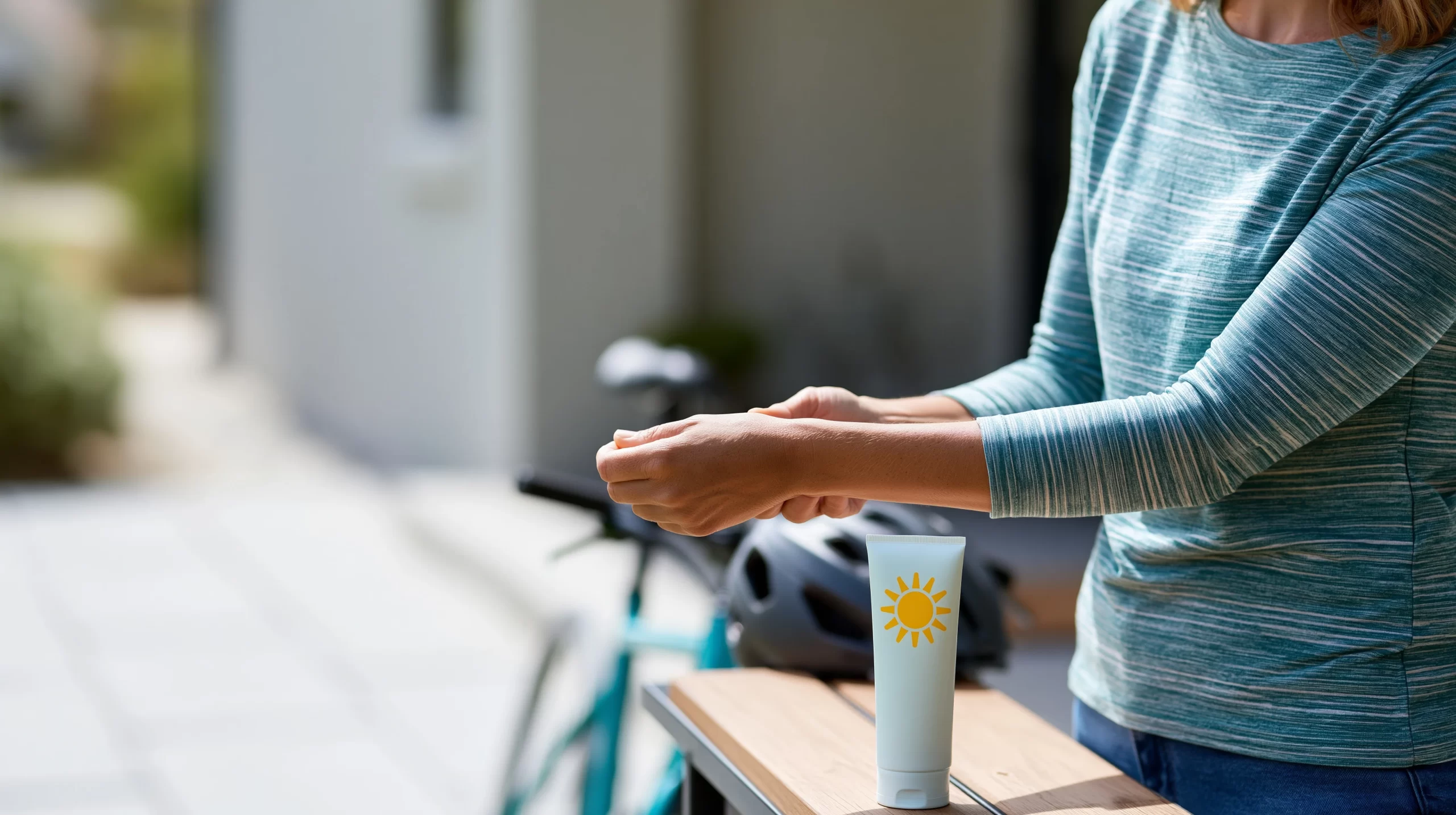
Dermatologists in Arizona, including those at Valleywise Health, which serves the broader Phoenix metro, are consistent on what actually matters: a good moisturizer and a broad-spectrum SPF 30 or higher sunscreen. Apply moisturizer immediately after bathing while skin is still slightly damp, to seal in moisture before it evaporates. Look for ingredients like hyaluronic acid, glycerin, or ceramides. For severely dry skin, ointments containing shea butter or petroleum jelly provide more durable protection than lighter lotions.
Sunscreen should be mineral-based when possible. Zinc oxide or titanium dioxide formulas are effective immediately upon application. Commonly missed spots in Arizona: ears, backs of hands, upper lip, tops of feet, and the back of the neck. Certain prescription medications can also increase UV sensitivity, so a medication review with a pharmacist or physician before peak summer is worth building into the annual routine.
Foot Care: The Item Most Often Left Off the List
Feet receive less attention than any other part of the body during a summer care routine, and in Arizona, they arguably deserve the most. Unlike other areas of the body, feet have relatively few oil glands and a high concentration of sweat glands, meaning they lose moisture through sweat quickly but don’t have much oil to retain it. In Surprise’s dry air, that combination leads to rapid drying and cracking.
A Surprise-area podiatrist at Fixing Feet PLLC specifically addresses this: moisturize feet daily using ingredients like salicylic acid, lactic acid, or urea, applied right after a shower when skin is most receptive. Never let moisturizer accumulate between the toes, where excess moisture can cause skin breakdown, a particularly important caution for seniors with diabetes. Sunscreen belongs on the tops of feet any time sandals are worn outdoors. And foot checks looking for cuts, swelling, discoloration, or skin changes should happen regularly, assisted by a caregiver if a senior has limited flexibility or reduced sensation. Heat-related fatigue and dizziness also increase the risk of foot injuries from tripping or stumbling. Our guide on reducing fall risks for elderly loved ones at home covers that connection in more detail.
Clothing and Outdoor Timing
In Surprise’s summer, what you wear and when you go outside matters as much as any topical care routine:
- Wear lightweight, loose-fitting, light-colored clothing in natural fabrics like cotton or linen. Light colors reflect heat rather than absorbing it. Natural fabrics breathe in ways synthetic materials don’t.
- Use a wide-brimmed hat that fully covers ears, neck, and face. Avoid straw hats, which let sunlight through the gaps.
- Add UV-protective sunglasses to protect eyes from direct sun exposure.
- Limit outdoor time to before 9 a.m. or after 6 p.m. Most of the day, roughly from 9 a.m. to 6 p.m., carries significant heat and UV risks for older adults during an Arizona summer.
- On unavoidable outdoor outings, cooling towels (activated by water and draped around the neck or wrists, where blood vessels are close to the skin) provide quick, portable temperature relief.
Medication Storage: A Summer Priority Most Families Miss
This is the checklist item that surprises families most, and one of the most clinically significant. Most medications are designed to be stored between 59°F and 77°F; refrigerated medications must stay between 36°F and 46°F. In a Surprise summer, both ranges are routinely violated in homes, cars, and mailboxes without anyone realizing it.
Interior car temperatures can reach 120°F or higher within minutes of parking. Mailboxes in direct afternoon sun can hit 140°F. Windowsill storage warms far beyond safe ranges during peak afternoon hours. The consequences are real: lorazepam loses 75% of its potency above 98°F, diazepam loses 25%, and epinephrine can lose nearly two-thirds of its effectiveness with repeated heating and cooling. Over 75% of people store at least one medication improperly, a concerning statistic in a city that regularly experiences 110°F summer days.
For families using home care support to manage an older adult’s medication routine, medication storage review is one of the most valuable things a caregiver can do. Our article on the best ways to make a home safe for older adults covers storage organization in the broader context of home readiness, including how to designate a spot that stays within safe temperature ranges even when the rest of the house heats up.
Practical summer steps: keep medications in a consistently cool, dry location away from windows and appliances, never leave them in a car, have a cooler with gel packs ready for any outings requiring refrigerated drugs, choose overnight shipping if ordering by mail, and keep a written medication list accessible to anyone providing emergency care.
Keeping the Home Environment Summer-Ready
A few home environment specifics make a meaningful difference across the months of a Surprise summer:
- Close blinds and shades during peak afternoon hours to reduce radiant heat through windows.
- Avoid using the oven, dryer, and other heat-generating appliances during the hottest parts of the day.
- Run air conditioning consistently, not intermittently. Maricopa County’s heat death data consistently shows that having AC present isn’t enough if it’s cycling on and off or running at reduced capacity.
- Consider a humidifier indoors, since air conditioning removes moisture from indoor air in addition to heat, and Arizona’s summer AC-cooled interiors can get extremely dry.
- Check the AC unit regularly, not just when it stops working. A unit running inefficiently is one of the most common precursors to a dangerous indoor heat event.
If you’re coordinating home care in Surprise that covers household monitoring alongside personal care, it’s worth discussing AC check protocols explicitly with any agency or caregiver because the connection between a failing unit and a heat emergency is well established locally.
When a Checklist Needs a Second Set of Hands
Many of the items on this list, including consistent hydration prompting, daily skin and foot checks, medication storage review, and outdoor timing supervision, are manageable for a senior who’s alert and mobile. For a senior who lives alone, manages several conditions, or finds the heat season cognitively or physically taxing, maintaining all of these independently across three-plus months of extreme heat is a meaningful challenge.
This is where families using home care in Surprise find value not just in the tasks a caregiver covers, but also in the daily presence that notices when something on the checklist isn’t happening. Amada Senior Care offers a free, no-pressure consultation to help your family figure out what level of support makes sense for summer, whether that’s a few hours each morning or more comprehensive daily coverage.
Frequently Asked Questions
How much water should a senior drink per day during a Surprise summer?
+
The National Academy of Medicine recommends about 13 cups of fluids daily for men 51 and older, and 9 cups for women 51 and older, but these amounts should increase with heat and activity. The best daily check is urine color: pale yellow indicates good hydration, while dark yellow signals the need to drink more.
Which medications are most affected by Arizona’s summer heat? +
Common ones include lorazepam, diazepam, insulin, epinephrine, nitroglycerin, and certain antibiotics. Even aspirin can chemically break down when stored above safe temperatures. When in doubt, ask a pharmacist whether a specific medication is heat-sensitive and what storage is recommended.
Is it safe for a senior to go outside at all during a Surprise summer?+
Yes, the key is timing. Before 9 a.m. is generally the safest time for Arizona seniors to be outdoors during the summer months. Lightweight clothing, a wide-brimmed hat, sunscreen, and water should go along on any outing, even a brief one.
What’s the best moisturizer for seniors living in Arizona’s desert climate?+
Dermatologists at Valleywise Health recommend keeping it simple: a good moisturizer containing hyaluronic acid, ceramides, or glycerin applied immediately after bathing, paired with SPF 30 or higher daily sunscreen. For severely dry skin, ointments with shea butter or petroleum jelly provide longer-lasting protection than standard lotions.
Why do feet need special care during an Arizona summer?+
Feet have fewer oil glands than other skin areas but more sweat glands, meaning they lose moisture through sweat quickly without enough oil to retain it. Arizona’s dry air accelerates that moisture loss, leading to cracking, soreness, and infection risk, especially for seniors with diabetes or circulation issues.