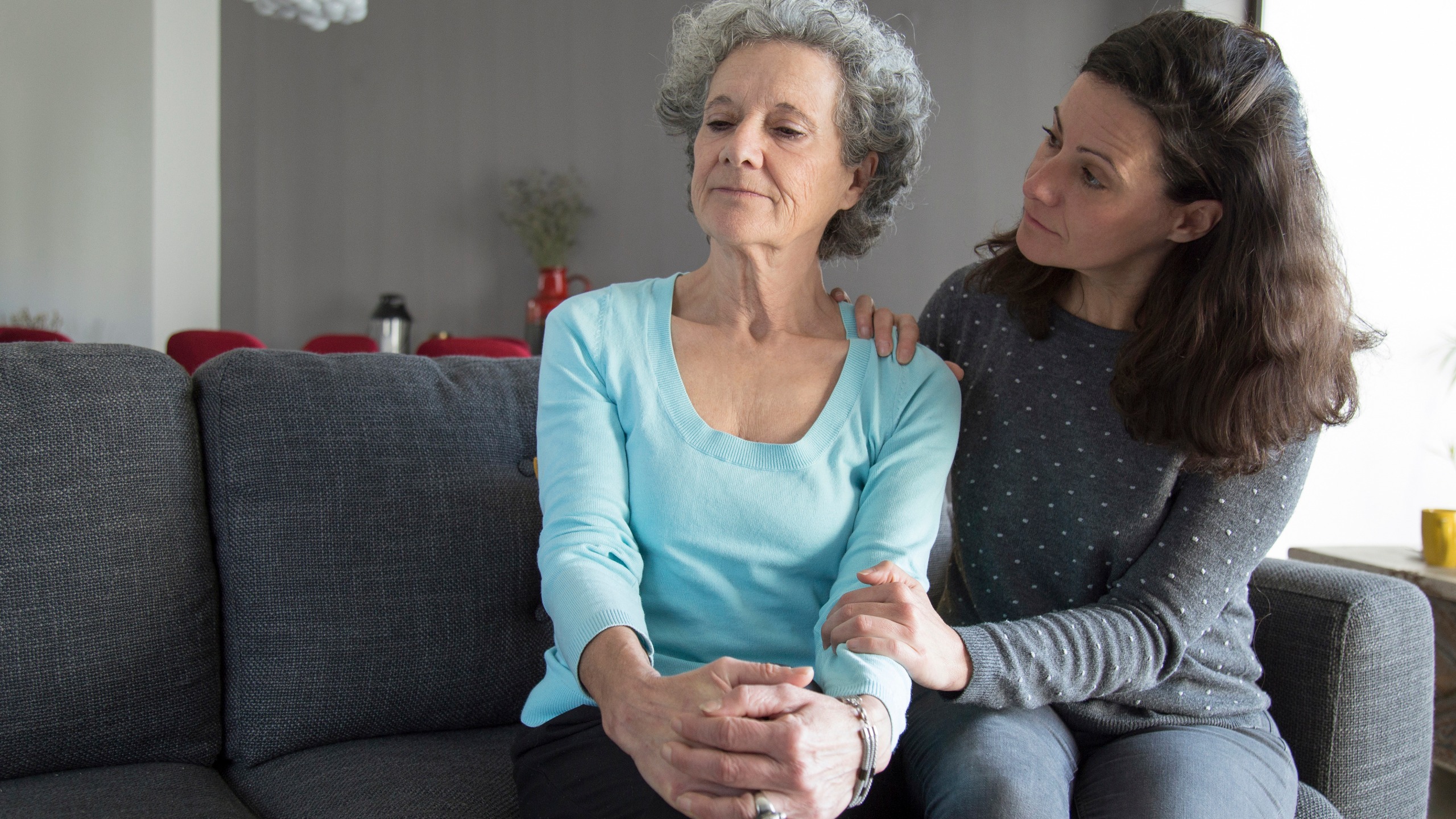
The best ways to communicate with a loved one who has dementia include creating a calm environment, using clear and simple language, relying on nonverbal communication, validating emotions, and showing patience.
Watching a senior loved one experience memory loss is heartbreaking, but staying connected is still possible even as the condition progresses. While conversations may change, adapting your communication style can reduce frustration and maintain a bond between you. Here are some practical strategies to foster understanding and meaningful connection.
How Can You Create a Calm and Supportive Environment before Talking?
Before you even speak, take a moment to assess the physical setting. A person with dementia often has difficulty filtering out background noise, which can make focusing on a conversation exhausting or impossible. If the television is blaring or a radio is playing, turn it down or off. Move to a quiet room where you can sit comfortably without interruptions.
Position yourself directly in front of your loved one so he or she can see your face clearly. Being at eye level conveys respect and helps you capture your loved one’s attention before you start talking. This physical closeness signals you’re present and ready to listen, which can significantly lower your loved one’s anxiety levels.
Why Are Nonverbal Cues So Crucial in Dementia Communication?
As dementia progresses, the ability to understand and use language often decreases. When words fail, your loved one will rely heavily on your body language, facial expressions, and tone of voice to understand the emotional content of your message. If you appear tense, impatient, or angry, your loved one will likely mirror those emotions, even if your words are kind.
To keep communication positive:
- Maintain a warm smile – This offers immediate reassurance and sets a friendly tone.
- Use open posture – Avoid crossing your arms, which can look defensive or closed off.
- Use gentle touch – A hand on an arm or shoulder can hold your loved one’s attention and provide comfort.
- Monitor your pitch – Speak in a calm, low, and reassuring tone of voice.
Living with dementia can make it difficult for seniors to manage everyday tasks on their own. Certain age-related conditions can make it more challenging for seniors to age in place safely and comfortably, but Surprise live-in care experts are available around the clock to help seniors manage their health. Whether your loved one is living with dementia or recovering from a stroke, you can trust the professional caregivers from Amada Senior Care to enhance his or her quality of life.
What Makes Simple and Direct Communication Most Effective?
Complex sentences and abstract questions can be overwhelming for someone with cognitive impairment. To make processing easier, break down your communication into short, simple sentences. Focus on conveying one idea or instruction at a time.
When asking questions, avoid open-ended inquiries that require too many choices, as this can lead to anxiety. Instead of asking “What would you like to wear today?” try limiting the options: “Would you like to wear the blue shirt or the red shirt?” If your loved one is having difficulty understanding you, repeat your message using the exact same wording. If that doesn’t work after a few tries, wait a few minutes and try phrasing it differently.
Trained caregivers who have experience in communicating with seniors with dementia can be a fantastic resource for family members. If your senior loved one has been diagnosed with a serious condition and needs help with tasks like meal prep, transportation, medication reminders, bathing, and grooming, reach out to Amada Senior Care, a leading provider of home care Surprise families can trust. We also offer comprehensive care for seniors with dementia, Alzheimer’s, and Parkinson’s.
How Does Validation Therapy Help Seniors Maintain Calm and Trust?
One of the most challenging aspects of dementia care is handling confusion about time, place, or people. Your loved one might believe he or she is living in the past or ask for a relative who has passed away. The natural instinct is to correct your loved one and ground him or her in reality, but this often leads to agitation, embarrassment, and arguments.
Instead, practice validation therapy. Join your loved one in his or her reality rather than trying to pull him or her back into yours. If your loved one is looking for his or her mother, asking “What was your mother like?” or “You miss her, don’t you?” is far more effective than reminding your loved one that she is gone. Acknowledge the feelings behind the words. This approach respects your loved one’s dignity and reduces emotional distress.
Why Are Patience and Reassurance Essential for Close Connection?
Communication takes longer when dementia is involved. Your loved one may need significantly more time to process what you’ve said and formulate a response. It’s crucial to allow these pauses without jumping in to finish your loved one’s sentences immediately. Interrupting can break your loved one’s train of thought and cause him or her to withdraw.
If your loved one is having difficulty finding a word, you can offer a gentle suggestion, but mostly, just offer your presence. Frequently reassure your loved one that he or she is safe and that you’re there to help. Sometimes, the specific words don’t matter as much as the feeling of being supported. If a conversation isn’t going well, don’t force it. It’s perfectly okay to drop the subject, distract your loved one with a favorite activity, and try again later when he or she is more rested.
Frequently Asked Questions
What services are included in dementia home care?
Dementia home care includes assistance with daily activities, personal care, medication reminders, and creating a safe, supportive environment.
How do caregivers handle the unique challenges of dementia?
Caregivers are trained to manage memory loss, confusion, and behavioral changes with patience, empathy, and tailored strategies.
Can dementia home care enhance quality of life?
Yes, it provides personalized care and engaging activities that promote emotional wellbeing and maintain independence for as long as possible.
Is dementia home care available for all stages of the condition?
Dementia home care is adaptable to all stages, offering appropriate support as needs evolve over time.
How do I know if dementia home care is right for my loved one?
If your loved one needs help with daily tasks, safety, or specialized care for dementia symptoms, home care can provide the necessary support.
Aging in place can present a few challenges for seniors living with dementia. However, with professional Surprise dementia care, older adults in the northwest Phoenix metropolitan area can still live independently at home. Families can rely on Amada Senior Care to provide their elderly loved ones with mental and social stimulation, timely medication reminders, assistance with meal prep, and much more. Our caregivers are available around the clock to help your loved one live a happier and healthier life. Call today to speak with a friendly and experienced Care Manager to formulate a home care plan for your loved one.